



 English
 Español
What Kind of Patio Umbrella Is Best
Content
- 1 Wooden Patio Umbrella: Natural Elegance With Maintenance Commitment
- 2 Aluminum Patio Umbrella: The Practical All Rounder for Most Buyers
- 3 Steel Patio Umbrella: Maximum Strength at Entry Level Price
- 4 Head to Head Comparison: Wooden vs Aluminum vs Steel Patio Umbrella
- 5 Canopy Fabric: The Other Half of Patio Umbrella Quality
- 6 Base Weight and Stability: Often More Important Than Frame Material
- 7 Frequently Asked Questions
- 7.1 1. What kind of patio umbrella is best for a beach or coastal location?
- 7.2 2. How long does a Wooden Patio Umbrella last?
- 7.3 3. Is an Aluminum patio umbrella strong enough for windy locations?
- 7.4 4. Why is the Aluminum patio umbrella more popular than the Steel Patio Umbrella in premium ranges?
- 7.5 5. Can I leave a Steel Patio Umbrella outside all year round?
- 7.6 6. What is the best size patio umbrella for a standard outdoor dining table?
- 7.7 7. How do I clean a patio umbrella canopy?
- 7.8 8. Does a Wooden Patio Umbrella provide better shade than aluminum or steel?
- 7.9 9. Which patio umbrella is easiest to assemble and set up?
- 7.10 10. What should I look for when buying a patio umbrella base?
The best patio umbrella pole material for most buyers in 2026 is aluminum, because it combines the lightest weight in the category, strong resistance to rust and UV degradation, low maintenance requirements, and a wide price range from budget to premium. An Aluminum patio umbrella suits the widest range of climates and use cases, from coastal humid environments to high UV desert settings, without the seasonal maintenance burden of wood or the weight and rust risk of steel.
That said, the right answer depends on your specific priorities. A Wooden Patio Umbrella delivers superior natural aesthetics and warmth that no metal frame can replicate, making it the correct choice for premium garden settings, traditional architecture, and buyers who are willing to invest time in annual care. A Steel Patio Umbrella offers the highest structural strength and wind resistance of the three materials, and at the entry level it is the most affordable option per unit of structural mass. The sections below examine each material in full practical detail so you can make a confident choice for your specific outdoor space.
Wooden Patio Umbrella: Natural Elegance With Maintenance Commitment
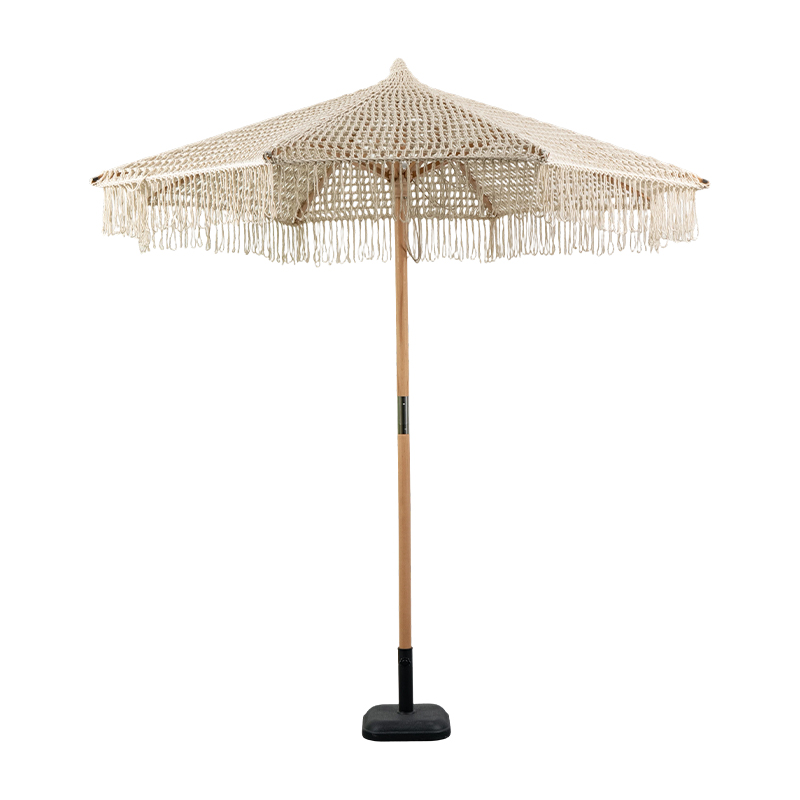
A Wooden Patio Umbrella uses a solid wood or laminated hardwood pole and rib assembly, typically crafted from teak, eucalyptus, pine, or beech depending on the price tier. Wood is the original patio umbrella pole material and remains the preferred choice for buyers prioritising a refined, natural visual character that complements traditional garden furniture, Mediterranean outdoor settings, and high end hospitality environments.
Wood Species Used in a Wooden Patio Umbrella
The species of wood used in a Wooden Patio Umbrella determines its natural durability, how much maintenance it requires, and how well it holds up under sustained outdoor exposure without finish treatment:
- Teak: The premium standard for outdoor wood furniture and patio umbrellas. Teak contains naturally occurring silica and teak oil that resist moisture penetration, fungal decay, and insect damage without any applied finish. A teak Wooden Patio Umbrella pole left untreated will weather to a silver grey patina over 12 to 18 months while retaining its structural integrity. Oiled annually, it maintains its original warm golden brown colour. Teak is the most expensive wood option, with quality teak pole umbrellas typically priced 40 to 80 percent above equivalent aluminum models.
- Eucalyptus: A widely used sustainable alternative to teak that offers similar density and natural oil content at a significantly lower price point. Eucalyptus framed Wooden Patio Umbrella products have expanded considerably in the market as FSC certified sustainable sourcing has made the material more commercially available. It requires annual oiling to maintain colour and surface integrity, similar to teak but with slightly faster weathering if left untreated.
- Pine and beech: Used in budget and mid range Wooden Patio Umbrella models. These softwoods and temperate hardwoods require pressure treatment or surface paint and varnish to achieve acceptable outdoor durability, and they must be stored indoors or under cover during wet seasons to prevent rot, splitting, and warping. A pine or beech umbrella pole stored outdoors through a wet winter without protective finishing will typically show visible checking and surface deterioration within one to two seasons.
Structural Performance of the Wooden Patio Umbrella
Wood is stiffer than aluminum under bending loads at equivalent diameter but significantly heavier, meaning a Wooden Patio Umbrella with a 48 mm diameter teak pole weighs considerably more than an equivalent aluminum pole at the same span. This weight contributes to stability when the umbrella is set into a base, but makes relocation more physically demanding. Wood's natural stiffness also means that sudden wind gusts that would flex an aluminum pole are resisted by wood through higher structural stress at the pole joints rather than flex, making the joint hardware (the finial cap, the runner, and the pole to rib connection) the structural weak point in a Wooden Patio Umbrella under wind loading. Quality wooden patio umbrellas use stainless steel or brass fittings at all structural joints to prevent galvanic corrosion between the metal hardware and the damp wood surface, which would otherwise loosen the joint and accelerate both wood rot and metal deterioration.
Maintenance Requirements for a Wooden Patio Umbrella
A Wooden Patio Umbrella requires more active maintenance than either aluminum or steel alternatives to preserve its appearance and structural integrity over multiple seasons:
- Annual oiling: Apply a penetrating teak oil or outdoor hardwood oil to all exposed wood surfaces at the start of each outdoor season. The oil replenishes the natural oils depleted by UV exposure and rain, restores the wood's warm colour, and maintains the surface barrier against moisture infiltration that causes checking and splitting.
- Seasonal storage: Store the Wooden Patio Umbrella in a covered, dry location during extended periods of rain, winter cold, or when the property is unoccupied. Prolonged exposure to standing water and freeze thaw cycles accelerates checking and can split the wood at the pole joints if moisture has penetrated before freezing temperatures arrive.
- Hardware inspection: Check all metal fittings, screws, and rib connectors at the start of each season. Replace any corroded or loose hardware before use, as a failing rib connector on a wooden frame can cause a rib to disengage under wind load and damage the canopy fabric.
Aluminum Patio Umbrella: The Practical All Rounder for Most Buyers
The Aluminum patio umbrella is the dominant product category in the global patio umbrella market, accounting for the majority of units sold at every price tier from budget to commercial grade. Its combination of low weight, genuine corrosion resistance, design versatility, and low maintenance makes it the default recommendation for residential buyers without a specific reason to choose wood or steel.
Why Aluminum Outperforms Wood and Steel in Most Climates
Aluminum does not rust. Unlike steel, which requires protective coating to prevent iron oxide formation when the metal is exposed to moisture and oxygen, aluminum forms a thin, stable oxide layer on its surface naturally that is self sealing and prevents further oxidation of the underlying metal. This means an Aluminum patio umbrella left in rain, coastal salt air, or high humidity environments will not develop the surface rust staining and structural weakening that affects uncoated or damaged steel frames over time.
The weight advantage of aluminum over steel is significant: a comparable diameter aluminum tube weighs approximately one third of the equivalent steel tube, reducing the overall umbrella weight by 30 to 45 percent for a given frame size. This lighter weight makes the Aluminum patio umbrella easier to open, close, reposition, and store single handedly, which is a meaningful practical advantage for regular daily use compared to the heavier steel alternative.
Aluminum Patio Umbrella Pole Construction and Quality Grades
Not all Aluminum patio umbrella frames are made from the same quality of aluminum. The most common grades used in patio umbrella production are:
- 6061-T6 aluminum alloy: The highest strength aluminum alloy commonly used in outdoor furniture and umbrella frames. With a tensile strength of approximately 310 MPa and a yield strength of 276 MPa, 6061-T6 provides the stiffness and strength needed for large commercial grade umbrella canopies of 3 to 4 metres diameter without requiring large wall thickness, keeping the frame weight low. An Aluminum patio umbrella marketed for commercial hospitality use (restaurant terraces, hotel pool decks) should specify 6061 or equivalent alloy designation.
- 6063 alloy (architectural grade): Slightly lower strength than 6061 but very commonly used in residential patio umbrella frames due to its excellent extrudability, which allows complex profile shapes and thin wall sections that reduce material cost and weight. Adequate for residential use in canopy sizes up to 2.7 metres diameter under normal residential wind exposure conditions.
- Powder coated finish: Most Aluminum patio umbrella poles and ribs are powder coated after extrusion. The powder coat adds colour, UV resistance, and a scratch resistant surface layer. Quality powder coatings on outdoor aluminum furniture are tested to withstand 1,000 hours of salt spray exposure (ASTM B117 standard) without blistering or adhesion loss. Cheaper products use thinner coatings that chalk and peel within two to three seasons in high UV environments.
Size and Configuration Options in the Aluminum Patio Umbrella Category
The Aluminum patio umbrella is available in the widest range of canopy sizes, shapes, and opening mechanisms of the three pole materials, because aluminum's light weight and design flexibility allow larger cantilever and offset designs that would be impractically heavy in wood or steel:
- Standard centre pole umbrella: Canopy diameters from 1.8 to 3.0 metres. The pole passes through the centre of the canopy and fits into a table hole or freestanding base. The most common format for residential dining tables and casual seating areas.
- Offset or cantilever umbrella: The pole is positioned to the side or rear of the canopy on an arm structure, allowing the shaded area directly beneath the canopy to be completely unobstructed by a central pole. Almost exclusively available in aluminum or steel frames due to the lever forces on the pole base that wood cannot efficiently sustain. Canopy sizes typically 2.7 to 4.0 metres diameter.
- Commercial market umbrella: Canopy diameters of 3.0 to 4.5 metres with heavy duty aluminum frame and commercial grade canopy fabric (typically 600-denier acrylic or solution dyed polyester at 300 grams per square metre or above). Used for restaurant terraces, hotel pool decks, and event venues requiring 8 to 12 hours daily use across a full outdoor season.
Steel Patio Umbrella: Maximum Strength at Entry Level Price
A Steel Patio Umbrella uses a steel pole, typically made from round or square tube carbon steel with a protective coating applied after fabrication. Steel is significantly stronger and stiffer than aluminum at equivalent tube dimensions, and significantly heavier — properties that make it the appropriate choice for applications requiring maximum structural robustness under wind loading, or for budget tier products where the higher material cost of aluminum or the complexity of working with wood makes steel the most economical frame material.
Structural Advantages of the Steel Patio Umbrella
Steel has a tensile strength of 400 to 550 MPa for standard structural tube grades, compared to 260 to 310 MPa for the aluminum alloys used in patio umbrellas, meaning a steel pole of the same dimensions as an aluminum pole is significantly stronger in bending. This structural advantage is most relevant for large canopy umbrellas (3 metres and above) in exposed locations subject to strong wind gusts, where the moment arm of the canopy area creates very high bending loads at the pole base. A quality Steel Patio Umbrella in a commercial base will typically withstand wind speeds that would deform or fail a budget aluminum frame of similar dimensions.
The weight of steel (approximately 7,850 kilograms per cubic metre compared to 2,700 kilograms per cubic metre for aluminum) also contributes passively to stability when the umbrella is in a freestanding base: the heavier pole assembly lowers the centre of gravity of the umbrella plus base system, reducing the tendency for the complete assembly to tip over in wind compared to a lighter aluminum setup in the same base.
Corrosion: The Critical Limitation of the Steel Patio Umbrella
The most significant practical disadvantage of a Steel Patio Umbrella compared to aluminum is its susceptibility to rust when the protective coating is damaged or fails. Steel requires a continuous intact barrier between the metal surface and the atmosphere to prevent iron oxidation. The standard protective treatments applied to steel patio umbrella frames are:
- Powder coating: The most common finish on a Steel Patio Umbrella. A thick thermoset polymer coating applied electrostatically and cured at 180 to 200 degrees Celsius. Provides good impact resistance and UV stability when applied at the correct film thickness (60 to 100 micrometres). The vulnerability of powder coated steel is at mechanical damage points: scratches, chips, or abrasion areas where the coating is breached allow moisture to reach the steel and initiate rusting that can spread laterally under the intact coating.
- Galvanisation followed by powder coating: Hot dip galvanising applies a zinc coating to the steel before powder coating, adding a sacrificial corrosion layer that continues to protect the steel even when the powder coat is chipped. This two layer system is the most durable coating specification for a Steel Patio Umbrella in humid or coastal environments and is standard on commercial grade steel umbrella poles. It adds cost but significantly extends the service life before rust related failure.
- Paint only: Used on the lowest price tier. Liquid paint applied by spray or dip provides a basic barrier but with lower adhesion, lower impact resistance, and faster UV degradation than powder coating. A paint finished Steel Patio Umbrella in a humid climate will typically show surface rust at scratched or chipped areas within one to two seasons if not touched up promptly.
When to Choose a Steel Patio Umbrella Over Aluminum or Wood
Choose a Steel Patio Umbrella when one or more of the following conditions apply:
- Budget is the primary constraint and the umbrella will be used in a dry climate or stored under cover when not in use, minimising the corrosion risk of the steel frame.
- Maximum structural strength is required for a large canopy (3 metres or above) in a location with high wind exposure, and a galvanised steel pole of appropriate wall thickness provides greater strength margin than the available aluminum alternatives at the same price point.
- The umbrella is for a temporary installation (seasonal pop up dining area, event use) where long term corrosion resistance is less important than initial purchase cost.
- The buyer prefers the additional base stability benefit of the heavier steel pole assembly in a freestanding setup without a large heavy base.
Head to Head Comparison: Wooden vs Aluminum vs Steel Patio Umbrella
| Criterion | Wooden Patio Umbrella | Aluminum Patio Umbrella | Steel Patio Umbrella |
|---|---|---|---|
| Weight | Heavy (teak pole 48 mm dia: approx 4 to 6 kg) | Light (same dia aluminum: approx 1.5 to 2.5 kg) | Heaviest (same dia steel: approx 4.5 to 7 kg) |
| Rust resistance | No rust; rot risk if untreated | Excellent; inherently rust free | Moderate; depends on coating integrity |
| Structural strength | Good for standard canopy sizes | Good to very good (alloy dependent) | Best of the three materials |
| Maintenance required | High (annual oil, seasonal storage) | Low (wipe clean, no finish treatment) | Medium (touch up chips to prevent rust) |
| Aesthetics | Warm, natural, premium look | Clean, modern, wide colour range | Functional; less premium appearance |
| Price range (2 to 2.7 m canopy) | USD 150 to USD 800 and above | USD 60 to USD 600 and above | USD 40 to USD 300 |
| Service life (well maintained) | 8 to 15 years (teak); 4 to 8 years (pine) | 7 to 15 years | 5 to 12 years (coating dependent) |
| Best climate suitability | Dry, moderate; needs cover in wet climates | All climates including coastal and tropical | Dry to moderate; avoid salt air without galvanising |
Canopy Fabric: The Other Half of Patio Umbrella Quality
Regardless of whether you choose a Wooden Patio Umbrella, an Aluminum patio umbrella, or a Steel Patio Umbrella, the canopy fabric determines how well the umbrella performs its core function of providing shade and weather protection over its service life. The frame and the canopy must be evaluated together, because even the best aluminum frame supporting a cheap thin polyester canopy will deliver a poor experience after one or two seasons.
Canopy Fabric Options and Their Performance Characteristics
- Solution dyed acrylic (Sunbrella and equivalents): The premium standard for outdoor canopy fabric. The pigment is added to the polymer solution before the acrylic fibers are extruded, so the colour runs through the entire fiber cross section rather than sitting on the surface. This makes solution dyed acrylic highly resistant to UV fading: quality solution dyed acrylic canopies retain 90 percent or more of their original colour after 3 to 5 years of direct outdoor UV exposure, compared to printed or surface dyed polyester which may show significant fading within one to two seasons. Solution dyed acrylic is also naturally mould and mildew resistant and cleans easily with soap and water.
- Solution dyed polyester: A more affordable alternative to acrylic that offers similar UV stability to solution dyed acrylic at 30 to 50 percent lower fabric cost. Used in mid range residential umbrellas. Not as breathable as acrylic but heavier and more resistant to tearing. A good choice for the Aluminum patio umbrella or Steel Patio Umbrella buyer looking for good canopy performance without the premium acrylic price.
- Standard polyester with UV coating: Used in entry level umbrellas. The UV stabiliser coating on the fiber surface provides adequate UV protection when new but degrades over 12 to 24 months of UV exposure, after which colour fading accelerates rapidly. Canopy fabric weight in this category is typically 160 to 200 grams per square metre, versus 280 to 320 grams per square metre for quality solution dyed fabrics.
UPF Rating and Shade Quality
The Ultraviolet Protection Factor (UPF) rating of a canopy fabric indicates how much UV radiation passes through the fabric. A UPF rating of 50 or above means the fabric blocks 98 percent of UV radiation, providing maximum practical sun protection for people seated beneath it. A quality patio umbrella canopy — whether on a Wooden Patio Umbrella, Aluminum patio umbrella, or Steel Patio Umbrella — should carry a UPF 50 or UPF 50 plus rating, as lower rated fabrics allow significant UV transmission that defeats the primary sun protection purpose of the umbrella in high UV climates and summer peak sun hours.
Base Weight and Stability: Often More Important Than Frame Material
Many patio umbrella owners focus entirely on the pole material when making a purchasing decision, but the base specification is equally critical to the umbrella's practical safety and usability. An Aluminum patio umbrella with an inadequate base is more dangerous in wind than a Steel Patio Umbrella in a properly weighted base, regardless of the relative strength of the frame materials.
The general rule for freestanding patio umbrella bases is: a minimum base weight of 25 kilograms for umbrellas up to 2.4 metres in diameter, 35 to 50 kilograms for umbrellas of 2.7 to 3.0 metres, and 60 to 90 kilograms for offset or cantilever designs of 3 metres and above. These figures apply to sheltered residential settings; exposed commercial locations require heavier bases or ground anchoring. Cantilever designs create much higher tip over forces at the base than equivalent centre pole umbrellas because the entire canopy weight and wind force acts through a horizontal arm at a distance from the base pivot, dramatically increasing the overturning moment that the base weight must resist.
Frequently Asked Questions
1. What kind of patio umbrella is best for a beach or coastal location?
For coastal locations with salt air, the Aluminum patio umbrella is the best choice because aluminum does not rust regardless of salt air exposure. A Steel Patio Umbrella in a coastal environment will develop rust staining at any coating damage point within one season without diligent maintenance. A Wooden Patio Umbrella in teak can tolerate coastal conditions well due to teak's natural oil content, but still requires annual oiling to maintain its appearance. For maximum low maintenance suitability in salt air, choose an Aluminum patio umbrella with a quality powder coat finish and a solution dyed acrylic canopy rated for marine and coastal UV exposure.
2. How long does a Wooden Patio Umbrella last?
A Wooden Patio Umbrella made from teak or eucalyptus, properly maintained with annual oiling and seasonal covered storage, can realistically last 10 to 15 years before the wood structure requires replacement. A pine or beech Wooden Patio Umbrella stored outdoors without consistent maintenance will typically show significant degradation within 3 to 5 years in a temperate climate, and can fail structurally at a joint or develop deep rot in the pole base within 4 to 6 years in a wet climate. The wood species and maintenance discipline together determine actual service life far more than brand or initial purchase price.
3. Is an Aluminum patio umbrella strong enough for windy locations?
A quality Aluminum patio umbrella with a 6061 alloy frame and adequate pole diameter (48 mm or above for canopies of 2.7 metres and larger) is structurally adequate for moderate wind exposure in a residential setting. For locations regularly experiencing wind speeds above 30 to 40 km/h, any patio umbrella — regardless of frame material — should be closed and secured when not actively in use. The canopy fabric acts as a large sail in strong wind, generating uplift and lateral forces that exceed the design limits of residential grade frames in sustained wind above 50 km/h. Always close and tie the umbrella before storms or high wind events regardless of whether the frame is aluminum, wood, or steel.
The Aluminum patio umbrella dominates the premium market over the Steel Patio Umbrella primarily because of weight, design versatility, and corrosion resistance. At the premium tier, buyers expect umbrellas that are easy to manoeuvre, available in a wide range of precise powder coat colours, and capable of being left outdoors in rain without rust staining the patio surface or nearby furniture. Aluminum achieves all three without the maintenance burden of steel coating repair. Steel remains competitive at the budget and commercial structural tiers where initial cost savings or maximum strength are the primary selection criteria rather than weight or finish longevity.
5. Can I leave a Steel Patio Umbrella outside all year round?
Whether you can leave a Steel Patio Umbrella outdoors year round depends entirely on the quality of its protective coating and your local climate. A high quality galvanised and powder coated Steel Patio Umbrella in a dry temperate climate can remain outdoors through mild winters without significant corrosion risk, particularly if the canopy is removed or covered during heavy rain and snow. In humid tropical, coastal, or freeze thaw climates, it is strongly recommended to store the Steel Patio Umbrella under cover or indoors during the off season to preserve the coating integrity and prevent corrosion from establishing at the pole base where standing water collects. Inspect all surfaces annually and touch up any chipped or scratched coating areas with matching outdoor metal paint before storing to prevent rust from spreading under the intact coating during storage.
6. What is the best size patio umbrella for a standard outdoor dining table?
For a standard 4-person outdoor dining table (typically 1.0 to 1.2 metres in diameter for round tables, or 0.9 by 1.5 metres for rectangular tables), the correct umbrella canopy diameter is 2.4 to 2.7 metres. This size provides overhang of 0.6 to 0.75 metres beyond the table edge on all sides, which is sufficient to shade all seated diners including their shoulders at peak sun angles in summer. For a 6-person table (typically 1.5 metres in diameter or 1.0 by 1.8 metres), choose a canopy of 2.7 to 3.0 metres. All three frame materials — Wooden Patio Umbrella, Aluminum patio umbrella, and Steel Patio Umbrella — are available in these standard sizes, with the widest product selection typically found in the aluminum category.
7. How do I clean a patio umbrella canopy?
For standard maintenance cleaning, brush loose dirt and debris from the canopy with a soft brush, then rinse with a garden hose. For more thorough cleaning, mix a solution of warm water and a small amount of mild soap, apply with a soft brush in gentle circular motions, and rinse thoroughly to remove all soap residue. Allow the canopy to dry in the open position before closing to prevent mildew from developing in the folded fabric. Do not use bleach on solution dyed acrylic or polyester canopies, as bleach weakens the fabric fibers and accelerates colour fading. For mould or mildew spots on a canopy, a dilute solution of white vinegar in water is effective and safe for most canopy fabric types.
8. Does a Wooden Patio Umbrella provide better shade than aluminum or steel?
The pole material of a patio umbrella — whether Wooden Patio Umbrella, Aluminum patio umbrella, or Steel Patio Umbrella — has no effect on the shade quality provided to the user. Shade quality is determined entirely by the canopy fabric, its UPF rating, its colour (darker colours absorb more UV, lighter colours reflect more heat), and the canopy diameter relative to the sun angle at the time of use. The pole material determines the frame weight, durability, maintenance needs, and structural performance in wind — not the shade or UV protection delivered to the people beneath it.
9. Which patio umbrella is easiest to assemble and set up?
The Aluminum patio umbrella is typically the easiest to assemble and set up of the three types, because its lighter pole weight makes single person handling easier, its pre drilled and pre fitted hardware requires less adjustment than wood, and its powder coated metal components slot together precisely without the swelling or warping risk of wood assembly in humid conditions. The Wooden Patio Umbrella requires careful alignment of metal hardware into pre drilled wood holes and may need two people for large canopy sizes due to pole weight. The Steel Patio Umbrella at entry level often uses simple push button assembly that is fast to set up but may have less precise tolerances than premium aluminum designs.
10. What should I look for when buying a patio umbrella base?
The three most important factors when selecting a base for any Wooden Patio Umbrella, Aluminum patio umbrella, or Steel Patio Umbrella are: weight (at least 25 kilograms for standard residential umbrellas; heavier for large or offset designs as described earlier in this guide), pole hole diameter match (the base pole hole must match the umbrella pole diameter precisely, typically 38 mm, 48 mm, or 60 mm — a loose fit creates dangerous tipping instability in wind), and fill compatibility (many bases are designed to be filled with water or sand after purchase to reach their rated weight while shipping lighter, which is a practical convenience but requires correct filling procedure to achieve the full stability rating). Avoid underweighted decorative bases sold as matched sets with budget umbrellas, as these frequently tip in moderate wind gusts and create a safety hazard for children and furniture.
 previous post
 +86-18767573570